Resume

Resume

Resume

FRENS

Boosted daily engagement for travelers by implementing a global feed, encouraging posting through AI suggestions, and incentivizing friend invites.

Boost daily engagement by providing

travelers with a central feed,

incentivizing them to invite friends,

and using AI-driven suggestions to

encourage posting.

Boosted daily engagement for travelers by implementing a global feed, encouraging posting through AI suggestions, and incentivizing friend invites.

TEAM

Product manager

UX designer( ME )

4 Engineers

MY ROLE

Behavioral Research

Conceptualization

Design

Usability testing

Competitive analysis

Dev handoff

DURATION

2 Months

Background and Problem

Background and Problem

So, people were not that engaged. How do we turn up the heat?

So, people were not that engaged.

How do we turn up the heat?

So, people were not that engaged. How do we

turn up the heat?

Imagine being a traveler or someone who loves discovering new places.


Our Frens engagement analysis report for December 2024, compared to January 2025, revealed a noticeable decline in both daily engagement and the number of posts.


To address these challenges, I explore a range of UX frameworks, working closely with the analytics team to uncover key insights through Geospatial Engagement Analysis.

40%

Fewer users were engaged on a

daily basis.

30%

Reduction in the number of posts on

the platform.

But what is Frens?

But what is Frens?

Frens is a travel companion app designed to help travelers connect with others while providing real-time information like local events, weather updates, and travel tips.
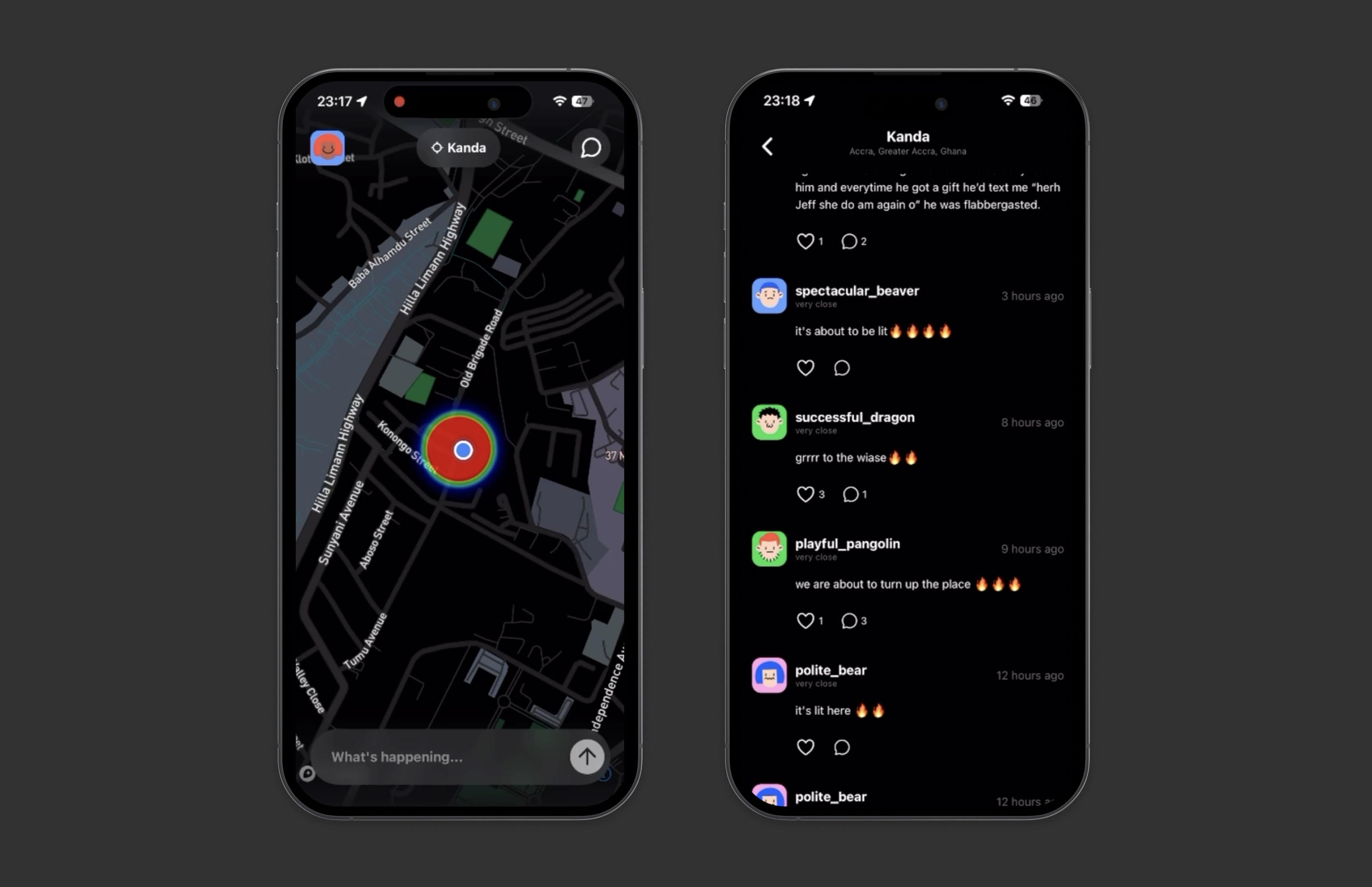
Previous home & feed page of a specific region of the Frens mobile app

THE PROBLEM

Users reported feeling regionally disconnected, which contributed

to a decrease in platform engagement.

Users reported feeling regionally disconnected, which contributed to decreased platform engagement.

As a user of Frens, a location-based platform, you’re first greeted with content tailored to your current location. However, this can sometimes lead to a sense of disconnection, especially if you're in an area where few people are using the platform. Without active conversations or a vibrant community in your immediate vicinity, it becomes harder to engage and feel connected.


This lack of engagement in specific regions led users to feel isolated from the broader platform community, limiting their ability to fully participate. As a result, many users posted less frequently, unsure of how to spark conversations or boost engagement in their regions. This challenge highlighted a crucial opportunity: how can we foster a more connected experience for users, regardless of their location?
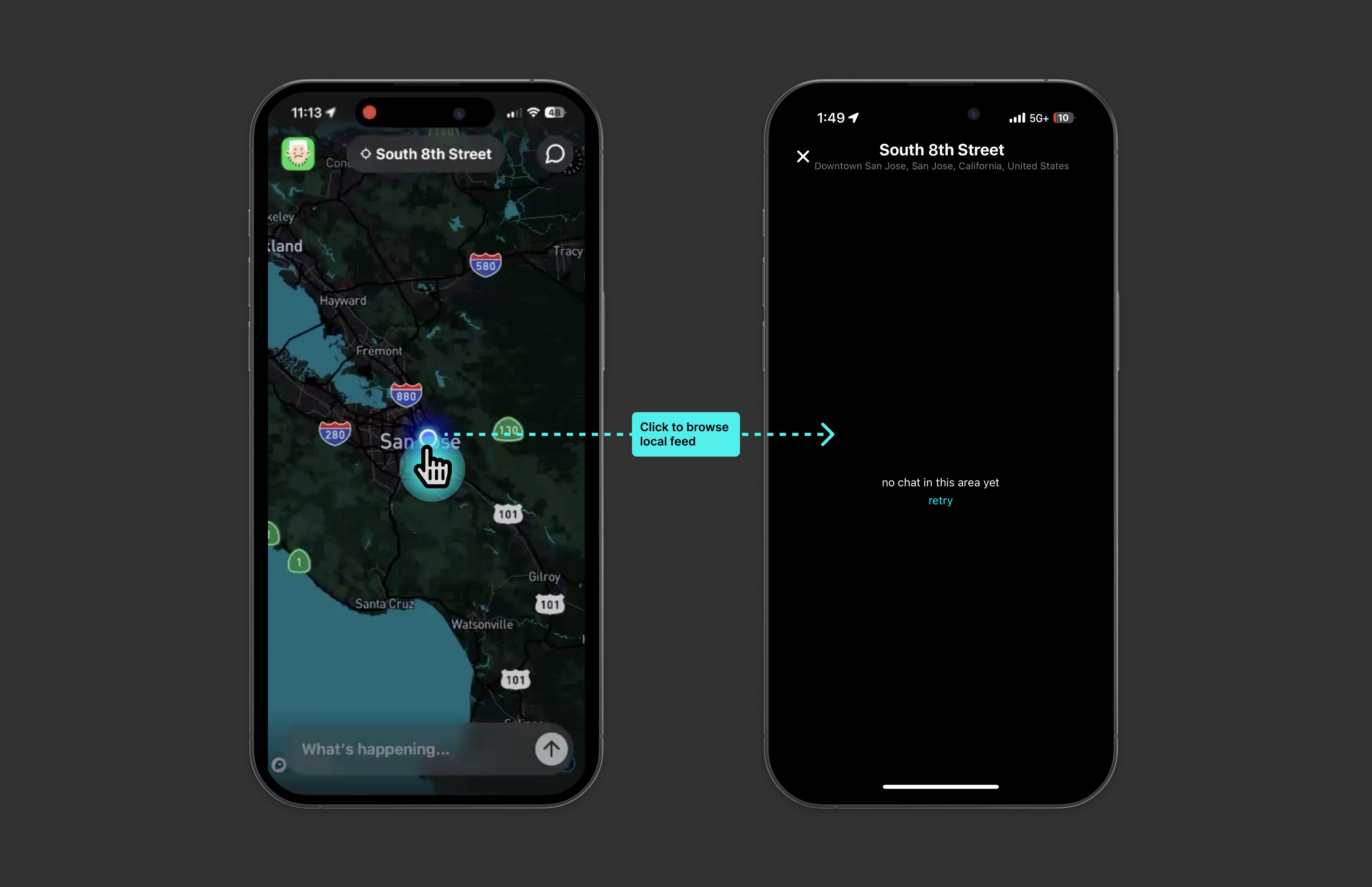
The current location in San Jose, CA, with low engagement and no content.
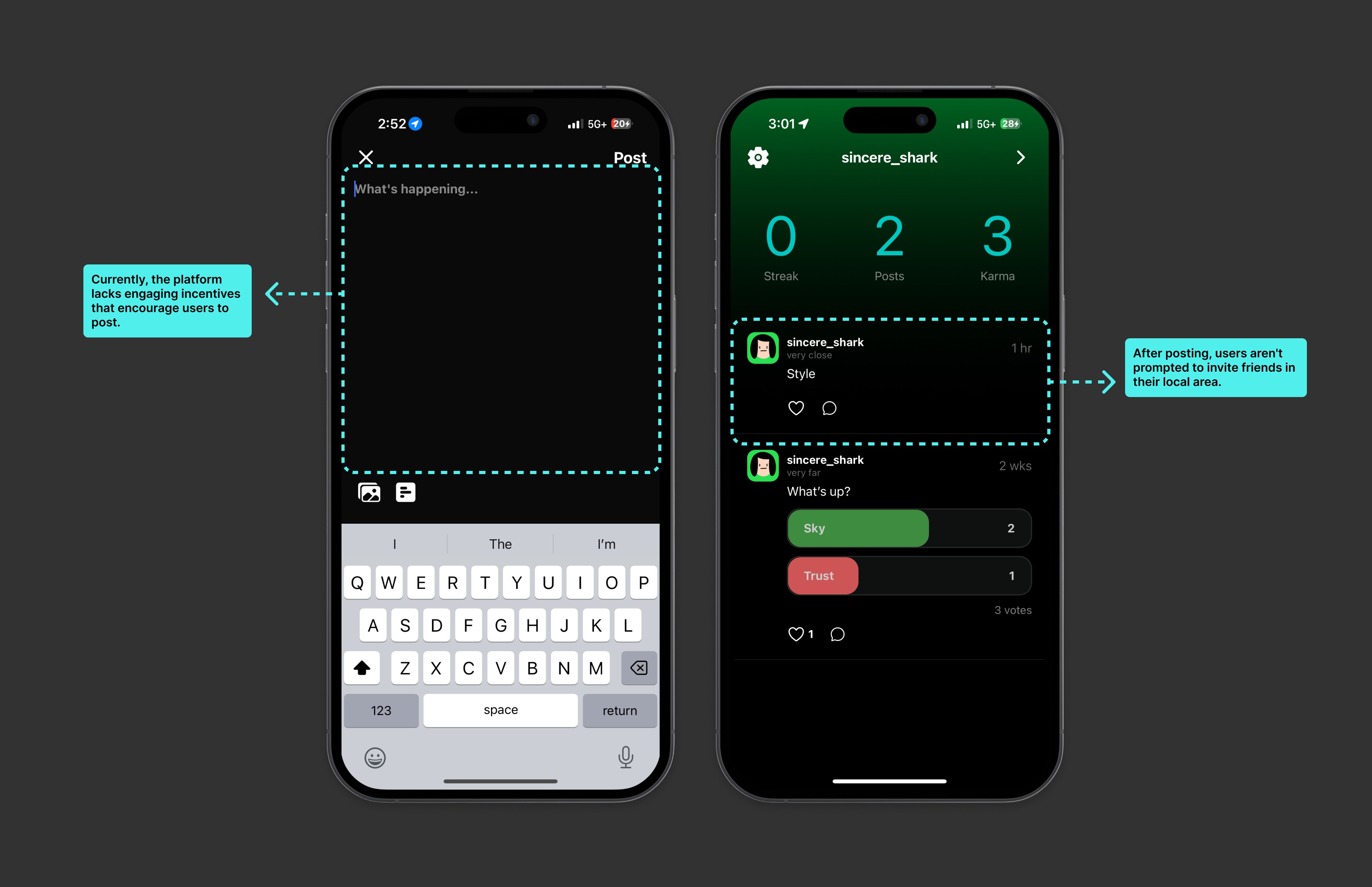
When a user posts content in a region, both during and after the posting process.

UNDERSTANDING THE SPACE

Exploring user behavior: a journey through

engagement challenges on Frens

Exploring user behavior: a journey

through engagement challenges on

Frens

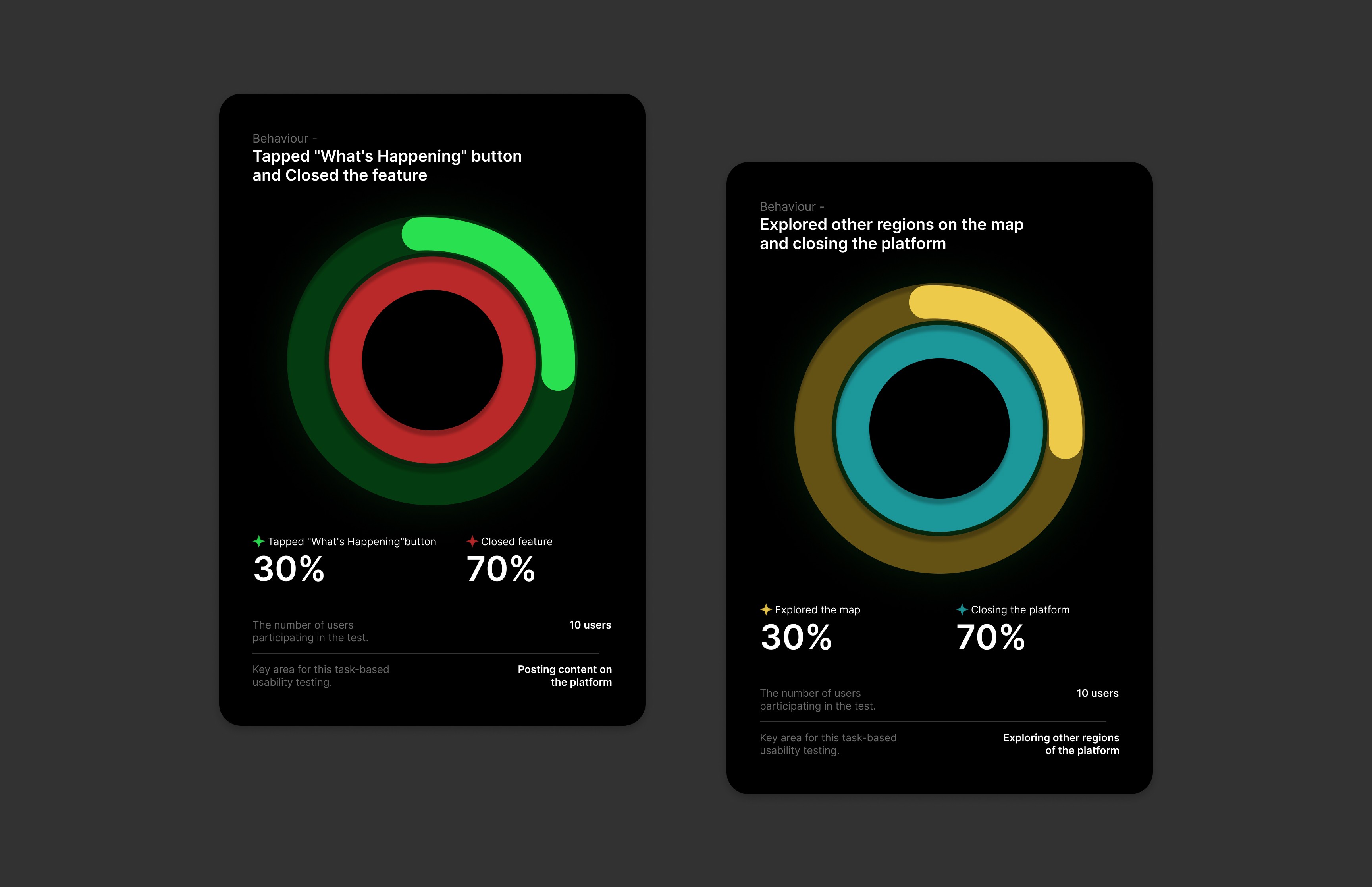
I conducted task-based usability testing with 10 users, asking them to post content and explore other regions. 7 out of 10 tapped the "What's Happening" button but quickly closed it, while 3 navigated the map to explore other regions. The rest closed the app, unable to find engaging content, revealing a clear need to improve cross-region interaction and engagement.
SOLUTION

Turning silence into stories - Helping users spark local

engagement and bring friends along

Turning silence into stories - Helping users spark local engagement and bring friends along

Turning silence into stories - Helping users spark local engagement and bring friends along

To address the drop in engagement, I designed a feature that gently prompts users with AI-generated content ideas and encourages them to invite friends, paired with a karma-based leaderboard that rewards sharing.
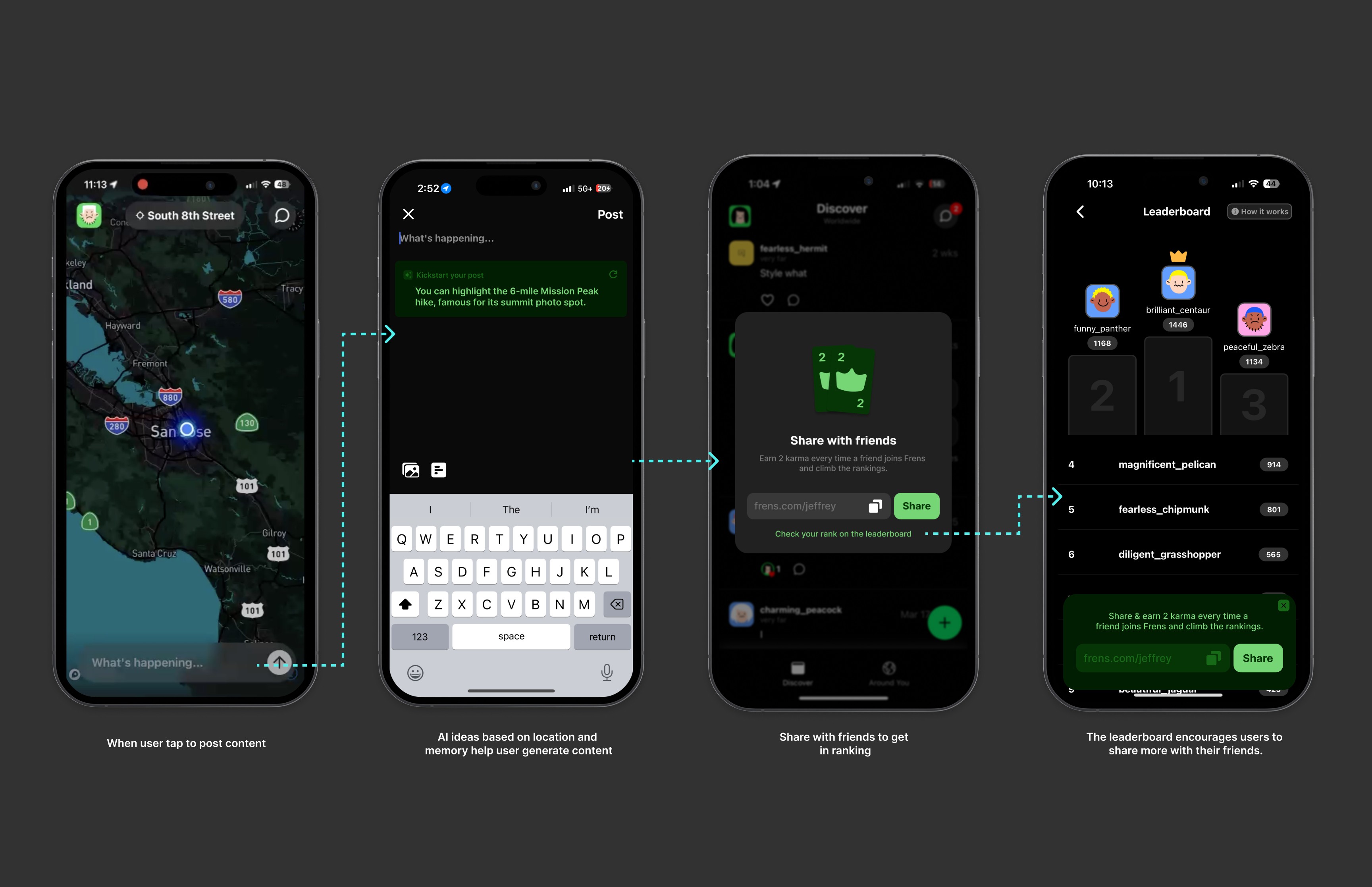
Insight from users: Users opened the app curious to explore, but the lack of nearby interaction left them feeling alone, so they left

Insight from users: Users opened the app curious to explore, but the lack of nearby interaction left them feeling alone, so they left

Insight from users: Users opened the app curious to explore, but the lack of nearby interaction left them feeling alone, so they left

Insight from users: The leaderboard motivated some, but others felt excluded or discouraged by how competitive it seemed

Insight from users: The leaderboard motivated some, but others felt excluded or discouraged by how competitive it seemed

Insight from users: The leaderboard motivated some, but others felt excluded or discouraged by how competitive it seemed

Insight from users: A few users felt the AI suggestions were too rigid, lacking flexibility or personalization.

Insight from users: A few users felt the AI suggestions were too rigid, lacking flexibility or personalization.

Insight from users: A few users felt the AI suggestions were too rigid, lacking flexibility or personalization.

Getting inspired to design flexible feeds

Getting inspired to design flexible feeds

Inspired by platforms like X and Nextdoor, I explored how giving users control over their feed, like switching between “Nearby” and “For You,” could reduce drop-offs and keep them engaged, even when local content is sparse.
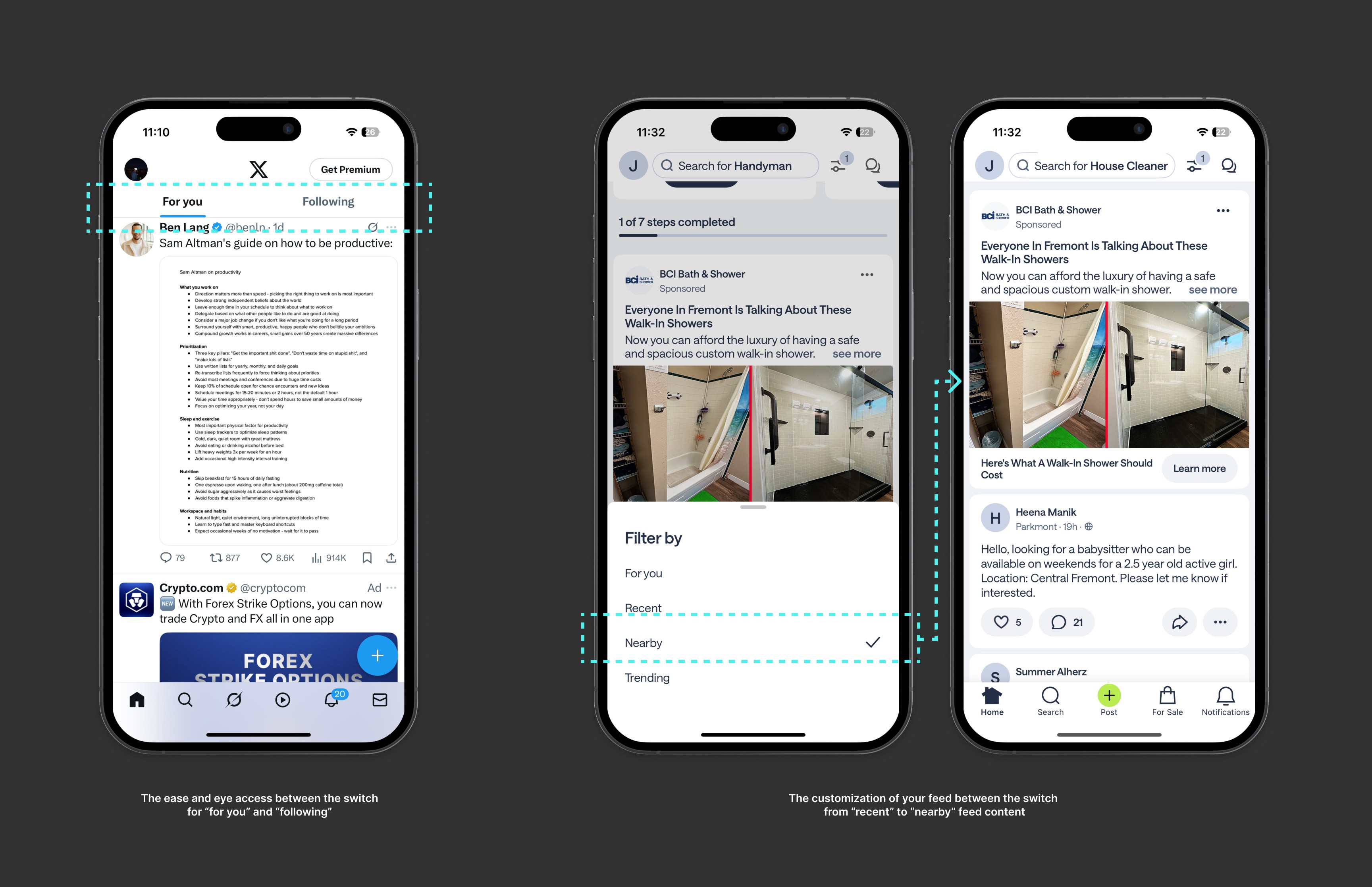
Rebuilding nearby interaction through micro-engagement

Rebuilding nearby interaction through micro-engagement

To reduce early drop-off and make local areas feel more alive, I introduced a location-based feed that lets users see and interact with nearby posts, even through simple polls or replies. This encourages small interactions that can grow into meaningful local conversations
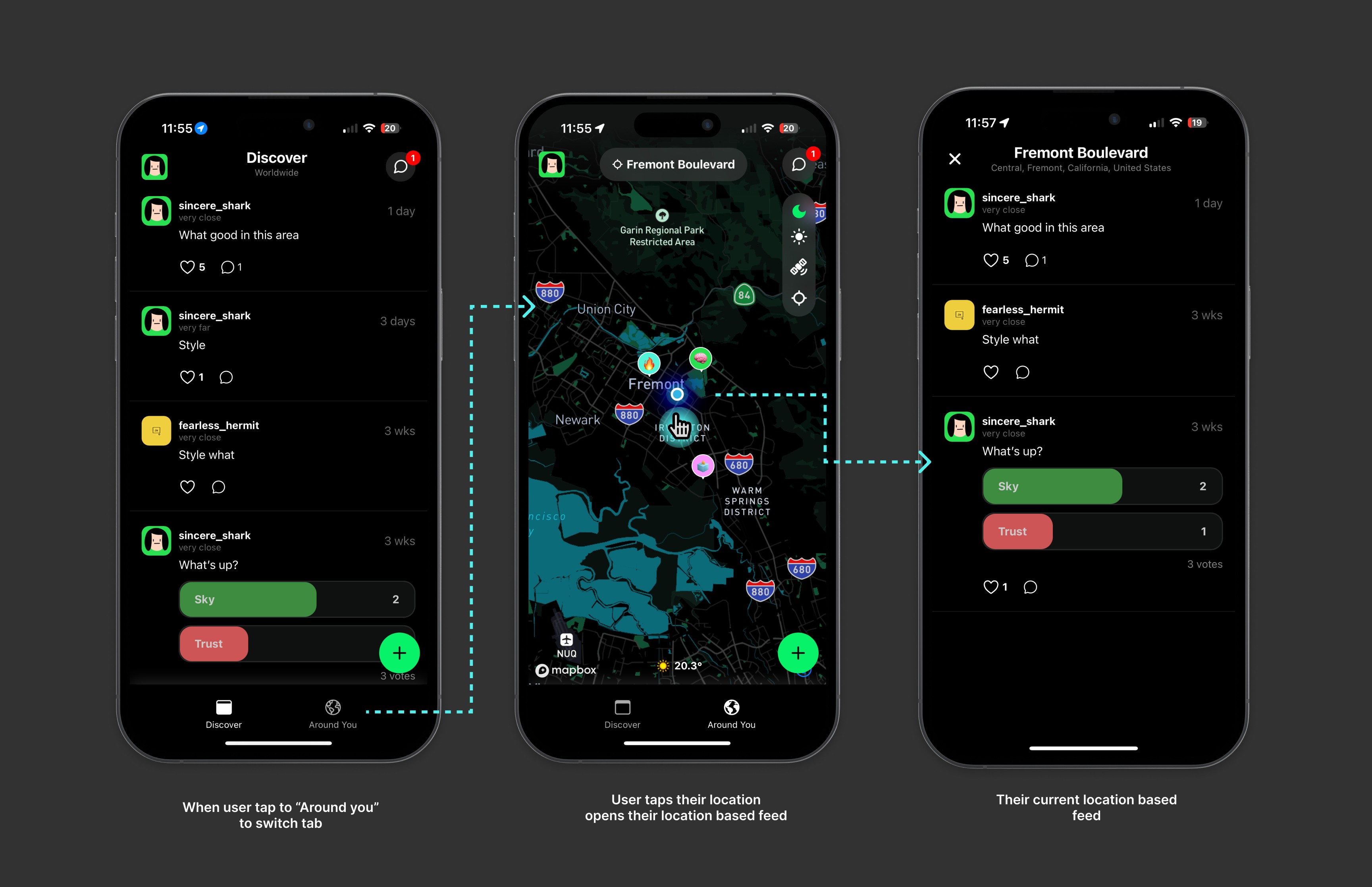
Insight from users: Users found the "Around You" tab intuitive and engaging. It made it easier to discover nearby conversations and

connect with others.

Insight from users: Users found the "Around You" tab intuitive and engaging. It made it easier to discover nearby conversations and

connect with others.

Insight from users: Users found the "Around You" tab intuitive and engaging. It made it easier to discover nearby conversations and connect with others.

Insight from users: Emojis added helpful visual cues, allowing users to quickly grasp the type of conversation happening nearby,

making the experience feel more personalized and dynamic.

Insight from users: Emojis added helpful visual cues, allowing users to quickly grasp the type of conversation happening nearby,

making the experience feel more personalized and dynamic.

Insight from users: Emojis added helpful visual cues, allowing users to quickly grasp the type of conversation happening nearby, making the experience feel more personalized and dynamic.

Insight from users: The map sparked curiosity, and users felt encouraged to explore more, which helped boost overall engagement.

Insight from users: The map sparked curiosity, and users felt encouraged to explore more, which helped boost overall engagement.

Insight from users: The map sparked curiosity, and users felt encouraged to explore more, which helped boost overall engagement.

Balancing competition with belonging

Balancing competition with belonging

To make the leaderboard more approachable, I added a “Local” tab to highlight nearby rankings. This helped users feel recognized in smaller circles and less discouraged by the global competition.
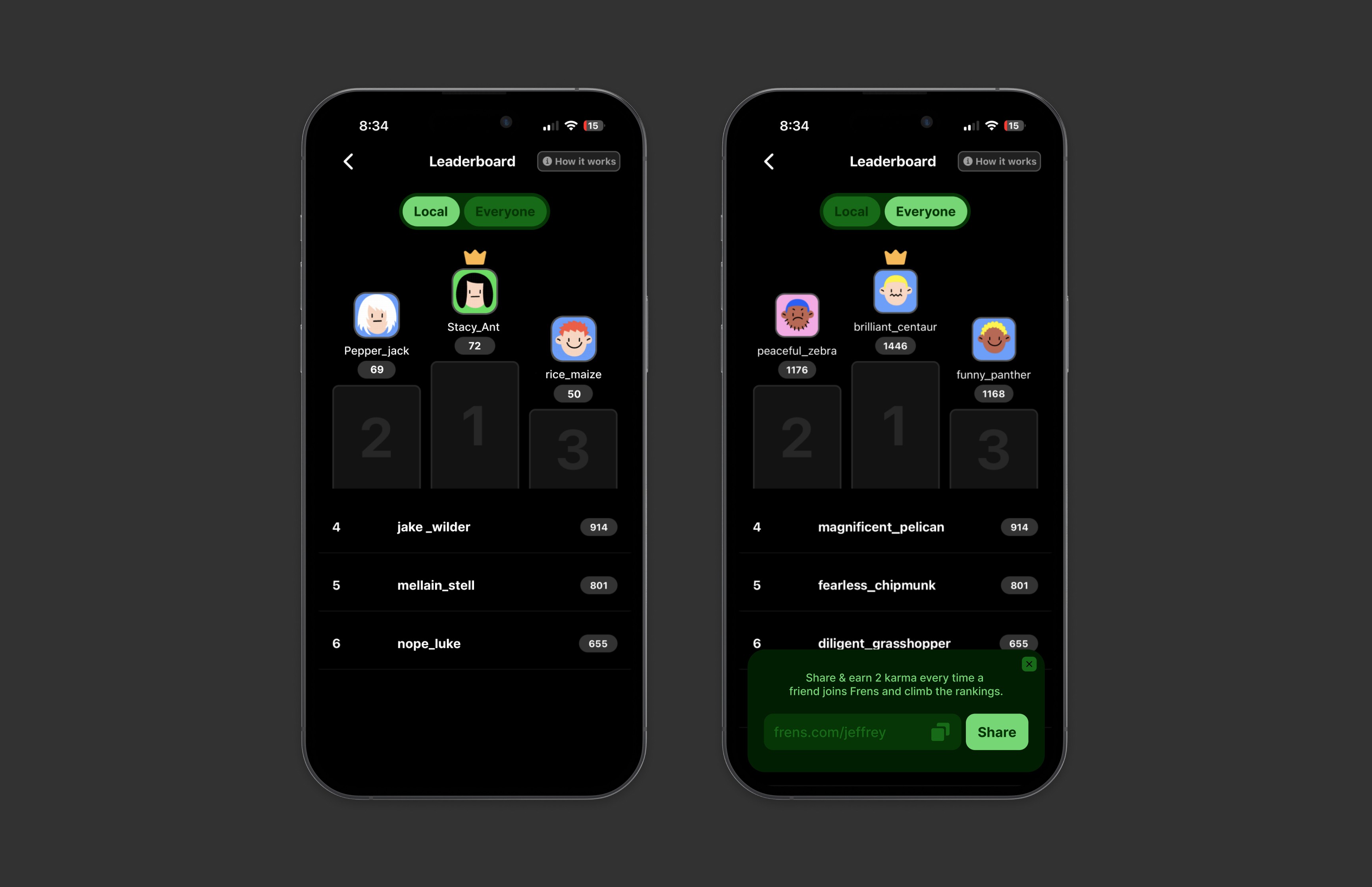
Insight from users: Seeing myself rank locally made the app feel more personal. It was exciting to know I was visible in my area.

Insight from users: Seeing myself rank locally made the app feel more personal. It was exciting to know I was visible in my area.

Insight from users: Seeing myself rank locally made the app feel more personal. It was exciting to know I was visible in my area.

Insight from users: Being able to climb the leaderboard by inviting friends felt fun; it turned sharing into a kind of challenge I wanted

to take on.

Insight from users: Being able to climb the leaderboard by inviting friends felt fun; it turned sharing into a kind of challenge I wanted

to take on.

Insight from users: Being able to climb the leaderboard by inviting friends felt fun; it turned sharing into a kind of challenge I wanted to take on.

Making AI feel more personal

Making AI feel more personal

To address feedback that AI suggestions felt too generic, I added a lightweight personalization flow. Users can now guide the AI by sharing their interests and photos, making the recommendations feel more tailored and relevant.
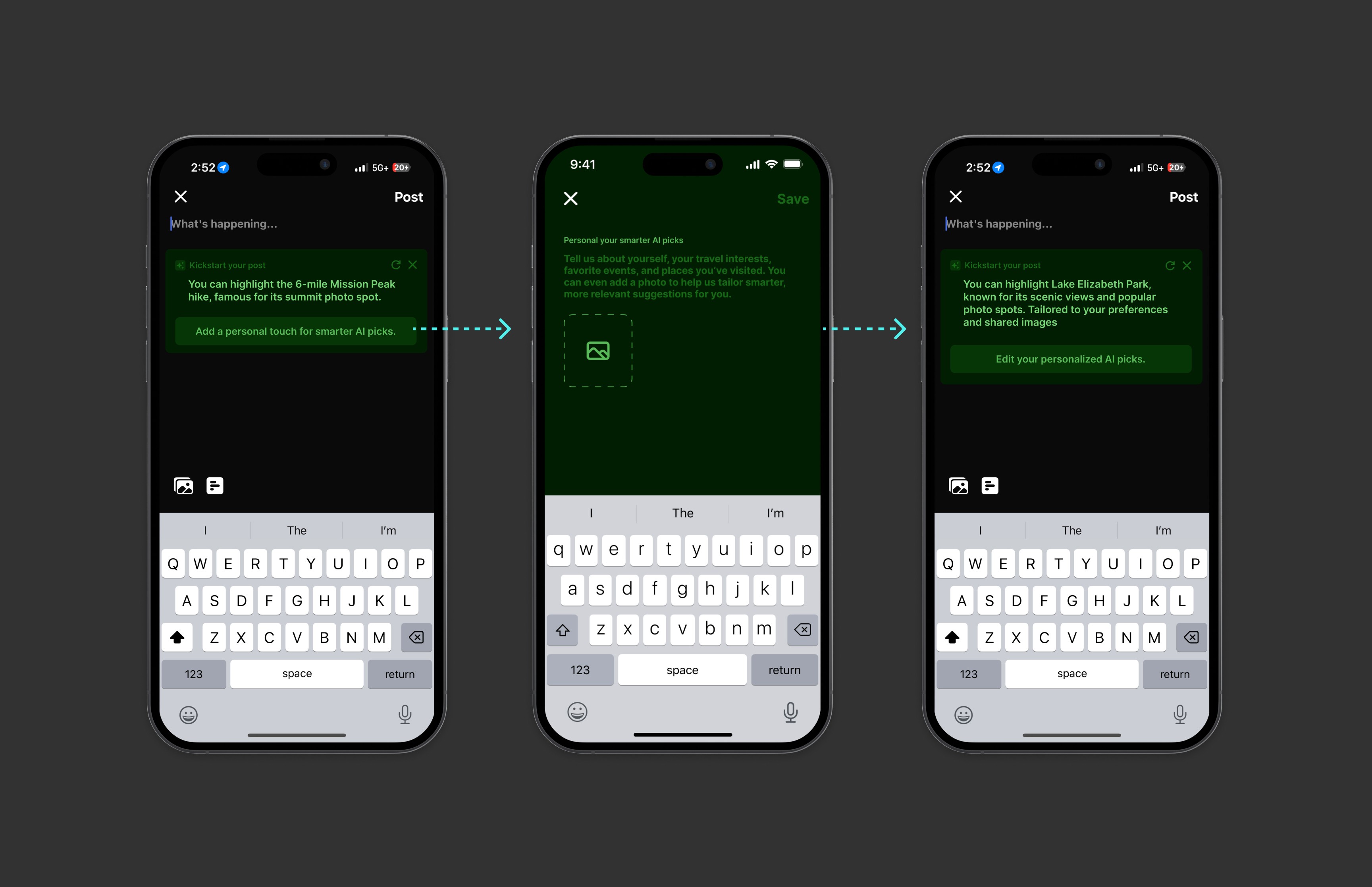
Insight from users: It was great to have suggestions that matched my interests; it felt like the app understood me better.

Insight from users: It was great to have suggestions that matched my interests; it felt like the app understood me better.

Insight from users: It was great to have suggestions that matched my interests; it felt like the app understood me better.

Insight from users: Personalizing the suggestions made posting easier. I didn’t have to start from scratch every time.

Insight from users: Personalizing the suggestions made posting easier. I didn’t have to start from scratch every time.

Insight from users: Personalizing the suggestions made posting easier. I didn’t have to start from scratch every time.

IMPACT

IMPACT

After deploying the solution, the impact was immediately noticeable:

30%

Increase in daily engagement, including
comments and likes on posts

Increase in daily engagement, including comments and likes on posts

Increase in daily engagement, including comments and likes on posts

60%

Increase in the daily number of posts on the platform as users began interacting more.

Signing off

Key Takeaways

Key Takeaways

This project was an incredibly rewarding experience. The key lessons I learned were:

Embracing User Feedback

Embracing User Feedback

Embracing

User Feedback

Putting the user at the center of the design process is essential. Testing and iterating based on real user feedback allowed me to craft a solution that truly met their needs.

The Power of Iteration

The Power of Iteration

The Power

of Iteration

Design solutions evolve over time. Continuous testing and feedback are crucial to ensuring that the final product resonates with users.

Impact of Engagement

Impact of Engagement

Impact of Engagement

Small design changes, like the introduction of icons instead of heat maps and AI-powered prompts, can significantly increase user interaction and engagement.

Conclusion

Conclusion

This case study illustrates how user feedback and testing shaped the design of Frens, leading to increased engagement and a more unified global experience. Through a thoughtful iterative process, I was able to address user pain points and deliver a solution that enhanced the overall user experience.

By focusing on user needs and continuously refining the design, we were able to make a measurable impact and create a more connected and engaging platform for travelers.